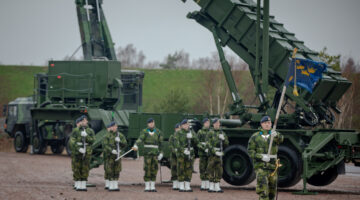
Swedish government launches first Patriot mission to Poland
The move, part of a NATO mission, comes as a new government is coming to power in Stockholm, with security policy at the heart of political row.
The move, part of a NATO mission, comes as a new government is coming to power in Stockholm, with security policy at the heart of political row.

The plane, which would be delivered in 2031, would be owned directly by the Netherlands.


A commitment to long-term operational value.
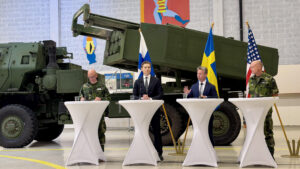
The $732 million acquisition comprises “just over” ten launchers together with a “substantial quantity” of ammunition, Defense Minister Pål Jonson said.
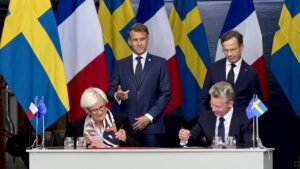
After inking a €4.3 billion frigate deal, Sweden’s defense minister told Breaking Defense Stockholm was keeping an “open mind” about additional cruise missiles.
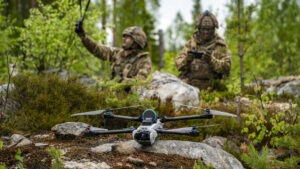
“We trust one another, and together we are stronger,” said Finnish President Alexander Stubb on X, by way of welcoming the expanded, bilateral cooperation.
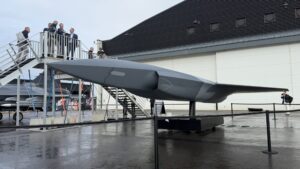
The A3, which Saab says may become the sales product, could enter service within ten years if the government decides to proceed with the aircraft.

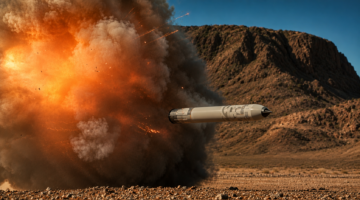
The goal of such weaponization is to tie warfighter needs to the RDT&E cycle.

The Nordic nation's future order will take its fleet of the multirole aircraft to 72 units.

From deep strike funding to a relatively tame Trump, what emerged from the event will have largely pleased most of the 32 allies.

The selection decision in favor of the Swedish aircraft comes after NATO axed plans to acquire Boeing E-7 Wedgetail surveillance planes.
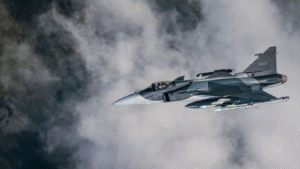
The deal is a first step in Kyiv’s planned ambition to purchase up to 150 of the advanced combat jets, noted Swedish Minister of Defense Pål Jonson on social media.

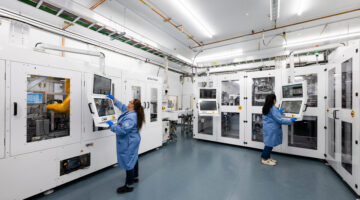
Lithium-metal batteries are one way to break the weight and endurance limits of today’s unmanned systems.
Two other defense agreements between Warsaw and Stockholm were signed as well.

While Embraer is partnered with Saab to manufacture the Swedish jet, Embraer CEO Francisco Gomes Neto said the fighter market “is not a place that we want to go to,” adding that the company is “studying other segments first.”
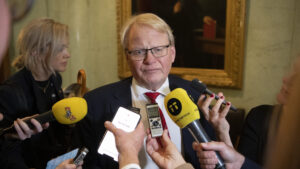
"So I think state part-ownership in Saab would be natural, while at the same time signaling strong Swedish team-building in international contexts," said Peter Hultquist, whose party is poised to win big in September elections.
While no deal is finalized, Sweden's Prime Minister stated that he looks forward to “welcoming Canada into the GlobalEye family.”